Filtering by: Other
Feb
18
6:30 pm18:30

MHPN: Mental Health in Palliative Care in Rural Communities

The Mental Health Professionals' Network (MHPN) invites you to an inaugural meeting to discuss mental health in palliative care in rural communities.

📅 Wednesday 18 February 2026

⏰ 6.30–8.00pm AEDT

💻 Online via Zoom

If you’re part of the rural palliative care or mental health workforce in the Murrumbidgee and beyond, your voice matters.

Register here: https://mhpn.org.au/members/#/Meeting/27386

View Event →
Feb
26
7:00 pm19:00

Innovations in lung function testing and analysis: Differential diagnosis of breathlessness

Breathlessness is a complex and debilitating symptom affecting up to 1 in 10 Australian adults. Join the Lung Foundation for a webinar to discuss differential diagnosis and latest innovations in lung function testing. 

URL: https://lungfoundation.com.au/events/innovations-in-lung-function-testing-and-analysis-differential-diagnosis-of-breathlessness/#register

View Event →
Mar
3
7:30 pm19:30

RACGP: Enhancing sexual health care delivery: Supporting International Medical Graduates in general practice

International Medical Graduates (IMGs) will gain knowledge and confidence in sexual health care in the Australian context through this webinar Hear from other IMGs who are working in Australian General Practice on useful communication strategies, clinical tools and referral pathways that support GPs to deliver guideline-based care.

Through real-world case studies on STI screening, contraception, and HIV prevention and support, IMGs will build confidence in managing common and emerging sexual health presentations in general practice

* CPD hours: Webinar EA 1 hour; with optional post-activity CPD: RP 1 hour and MO 1 hour activities.

Learning outcomes

  1. Identify current Australian STI and HIV guidelines that inform testing, diagnosis, prevention and treatment.

  2. Describe evidence-based strategies for managing common and emerging sexual health presentations in general practice.

  3. Apply a patient-centred contraception consultation framework that incorporates shared decision-making.

  4. Select and use practical tools, digital resources and referral pathways to support efficient, patient-centred sexual healthcare.

URL: https://www.racgp.org.au/racgp-digital-events-calendar/online-event-items/webinars/enhancing-sexual-health-care-delivery-supporting-i

View Event →
Mar
4
2:00 pm14:00

MLHD: Advance Care Planning: How to Complete and Access an Advance Care Directive: A Guide for Clinicians

My name is Emma and I am the CNE for Advance Care Planning,

I am excited to be running 6x virtual education sessions where each month I will be focusing on a different aspect of Advance Care Planning.

These sessions run from 2pm – 2.45pm and are targeted at all health professionals working in MLHD, regardless of your role or workplace, I invite you all to attend.  

The sessions are designed to be interactive, we encourage if able you have the ability to access the camera and a keyboard to participate in the discussion.

For further information or enquiries, please contact Emma Murphy

E: Emma.Murphy8@health.nsw.gov.au   |   Ph: 0439 987 925

What will the sessions cover?

Wednesday August 6thTopic One: Facilitating Goals of Care, The Role of Advance Care Planning. 

  • What is Advance Care Planning and why is it important?

  • How does it benefit clinicians, patients, and organisations.

  • Advance Care Planning in Australia.

  • Advance Care Planning in NSW. 

  • Components of Advance Care Planning.

  • Advance Care Plans and Directives. 

  • What makes an ACD valid, when does it not apply and when does it need to be followed. 

Wednesday September 3rdTopic Two: Who Does What? Roles and Responsibilities in Advance Care Planning.

  • Having the conversation, who does it, who needs to be involved, where does this happen?

  • Capacity and Consent.

  • When to utilise an ACD.

  • Escalation of concerns and handing over to other clinicians/facilities.

Wednesday October 1stTopic Three: Ethics and the Law in Advance Care Planning. 

What Clinicians Need to Know.

  • Capacity, Consent and ACP in NSW.

  • ACP in other states and territories.

  • Common Law.

  • ACP terminology: Enduring Guardian, Substitute Decision Maker.

  • Signing, witnessing and validity.

  • VAD, tissue and organ donation.

  • Resources and support available.

Wednesday November 19thTopic Four: When to Begin, What to Say and When to Say More:

A Guide to having Advance Care Planning Conversations.

  • Who with? When? How to have the conversation.

  • Preparing for ACP discussions.

  • Responding to cues from patients and families.

  • Communication. 

Wednesday February 4thTopic Five: Understanding the Differences: Advance Care Planning, Advance Care Directives and NFR Orders.

  • The purpose of each vs the differences.

  • When would someone need one of these documents.

  • When does it get completed and how long does it last.

  • When should it be used?

  • What happens if my patient does not have any of the above?

Wednesday March 4thTopic Six: How to Complete and Access an Advance Care Directive: A Guide for Clinicians.

  • A breakdown of each section of the ACD.

  • ACD in NSW.

  • How to find on EMR.

  • Where to upload this.

  • Information for patients and families (accessing, storage, copies).

  • Changing/Revoking an ACD.

View Event →
Mar
4
7:00 pm19:00

Current and Emerging Therapies for Osteoarthritis

Osteoarthritis (OA) affects more than 600 million people worldwide and remains a leading cause of pain, disability, and joint replacement. Despite its enormous burden, current care continues to fall short: core treatments are underused, many patients receive low-value or fragmented care, and available pharmacologic options offer only modest benefit with safety concerns. Optimising evidence-based foundations—education, weight management, exercise therapy, and psychologically informed care—must remain the first priority. These interventions are highly effective, scalable, and central to preventing treatment failure, yet remain inconsistently implemented across health systems. At the same time, rapid innovation is reshaping what is possible in OA management.

- Repurposed medications: such as GLP-1 agonists, metformin, and methotrexate show meaningful improvements in pain, function, and potentially disease progression.

- Digital health tools: AI-enabled self-management platforms, and remote monitoring tools are transforming access, adherence, and personalised care.

- Advances in smart drug delivery systems: Rather than just treating symptoms, senolytics and therapies that aim to modify OA by targeting specific molecular mechanisms (Endo-type targeted disease modifying drugs - DMOADs) offer the prospect of precision medicine, with pivotal trials expected in 2026.

The future of OA care will rely on integrating these innovations with optimised core treatment models. Combining behavioural, pharmacological, and technological strategies offers an opportunity to reduce treatment failure, promote equity, and deliver patient-centred, mechanism-aligned care at scale.

SPEAKER: Professor David Hunter | Florance and Cope Chair of Rheumatology, Professor of Medicine, NHMRC Leadership Investigator Fellow, Sydney Musculoskeletal Health, Kolling Institute, University of Sydney and Rheumatology Department, Royal North Shore Hospital.

URL: https://us02web.zoom.us/webinar/register/WN_hem-qtynTSaZEVbMFEflfQ#/registration

View Event →
Mar
5
10:30 am10:30

Comorbidity Guidelines webinar: Dialectical behaviour therapy in practice: A clinician's guide

This webinar will give an overview of applying dialectical behaviour therapy into alcohol and other drugs clinical practice and is part of the University of Sydney’s Matilda Centre for Research in Mental Health and Substance Use Comorbidity Project webinar series, which is focused on applying evidence into practice.

This webinar will be presented by Dr Natalie Mastrogiovanni

Dr Natalie Mastrogiovanni is a research psychologist at the Matilda Centre for Research in Mental Health and Substance Use, and also works as a clinical psychologist in community mental health, seeing adults with complex mental health needs. Natalie generally works with clients who have complex trauma backgrounds, personality vulnerabilities, emotional dysregulation and substance use.

Natalie tailors evidence-based treatments to suit clients’ needs, primarily working with Cognitive Behavioural Therapy, Dialectical Behaviour Therapy, Acceptance and Commitment therapy, trauma-focussed CBT and schema-informed approaches.

By the end of this webinar, attendees will be able to:

  • Identify and describe the key components of the DBT model

  • Outline DBT skills and determine when they are best applied

  • Understand how DBT skills and concepts can be incorporated into AOD clinical practice

URL: https://uni-sydney.zoom.us/webinar/register/WN_fWpf-NCQQHqLP7YONsb1sA#/registration

View Event →
Mar
5
12:00 pm12:00

NCIRS: Influenza vaccination in 2026: a new era of protection

Get ready for 2026 influenza vaccination with the latest insights, guidance and practical tips from leading experts.

Following unusually high numbers of out‑of‑season influenza cases across both hemispheres, increasing vaccination uptake will be critical in 2026. Without improved vaccine uptake, vulnerable Australians, including babies, young children and older adults, face an increased risk of serious illness and hospitalisation.

This webinar brings together the latest evidence on influenza burden and vaccination coverage, alongside expert insights into what to expect in the upcoming season. It will also provide important updates on influenza vaccines available in Australia in 2026, including the introduction of the live attenuated influenza vaccine (LAIV), which will be available and funded for the first time through some state and territory programs.

Expert speakers will outline key considerations for immunisation providers, share recent trends in Australian and global influenza virus circulation, and provide you with practical guidance to support vaccine delivery and effective conversations with patients.

The webinar will cover:

  • recent trends in influenza burden and vaccine coverage

  • the 2026 National Immunisation Program and state-based influenza vaccination programs

  • influenza vaccines available in Australia in 2026, including LAIV

  • practical strategies for administrating LAIV, and for responding to common patient questions.

Can’t make it live? You can catch up later – the webinar will be recorded and made available on the NCIRS website. Register now to receive the link straight to your inbox once it’s ready.

View Event →
Mar
12
to 13 Mar

2026 Essentials of Emergency Nursing: A Workshop for Practice Nurses

We are excited to invite you to Canberra for our 2026 Essentials of Emergency Nursing: A Workshop for Practice Nurses, designed to equip you with vital skills and knowledge for handling urgent and emergency situations in primary care.

This interactive workshop is tailored for practice nurses looking to enhance their confidence in managing acute presentations, urgent care scenarios, and effective triage. Delivered by one of Australia’s leading  emergency nurses, the session will cover:

✅ Recognition and management of common emergencies
✅ Assessment and triage in a primary care setting
✅ Immediate interventions for critical conditions
✅ Effective communication in high-pressure situations

Whether you are new to emergency care or seeking a refresher, this workshop will provide practical, hands-on learning to elevate your clinical practice.

📅 Date: 12th/13th March 2026
📍 Location: Mantra on Northborne - Canberra
🎟 Registration: See attached flyer or https://www.thinkasklearn.com.au/practice_canberra26.html

View Event →
Mar
14
8:20 am08:20

Menopause: the good, the bad and the challenging

This 1-day live online workshop featuring expert specialists in menopausal medicine, focusing on evidence-based management of perimenopause, menopause and related conditions, with practical insights to improve patient care and outcomes.

Learning Outcomes

  • Identify key considerations for managing perimenopause and menopause.

  • Discuss myths and evidence-based clinical practice in menopause.

  • Recognise interdisciplinary assessments and approaches related to menopause.

  • Formulate management and referral plans for complications associated with menopause. 

URL: https://www.monash.edu/medicine/scs/ob-gyn/teaching/short-courses-for-professional-development/menopause

View Event →
Mar
25
8:00 am08:00

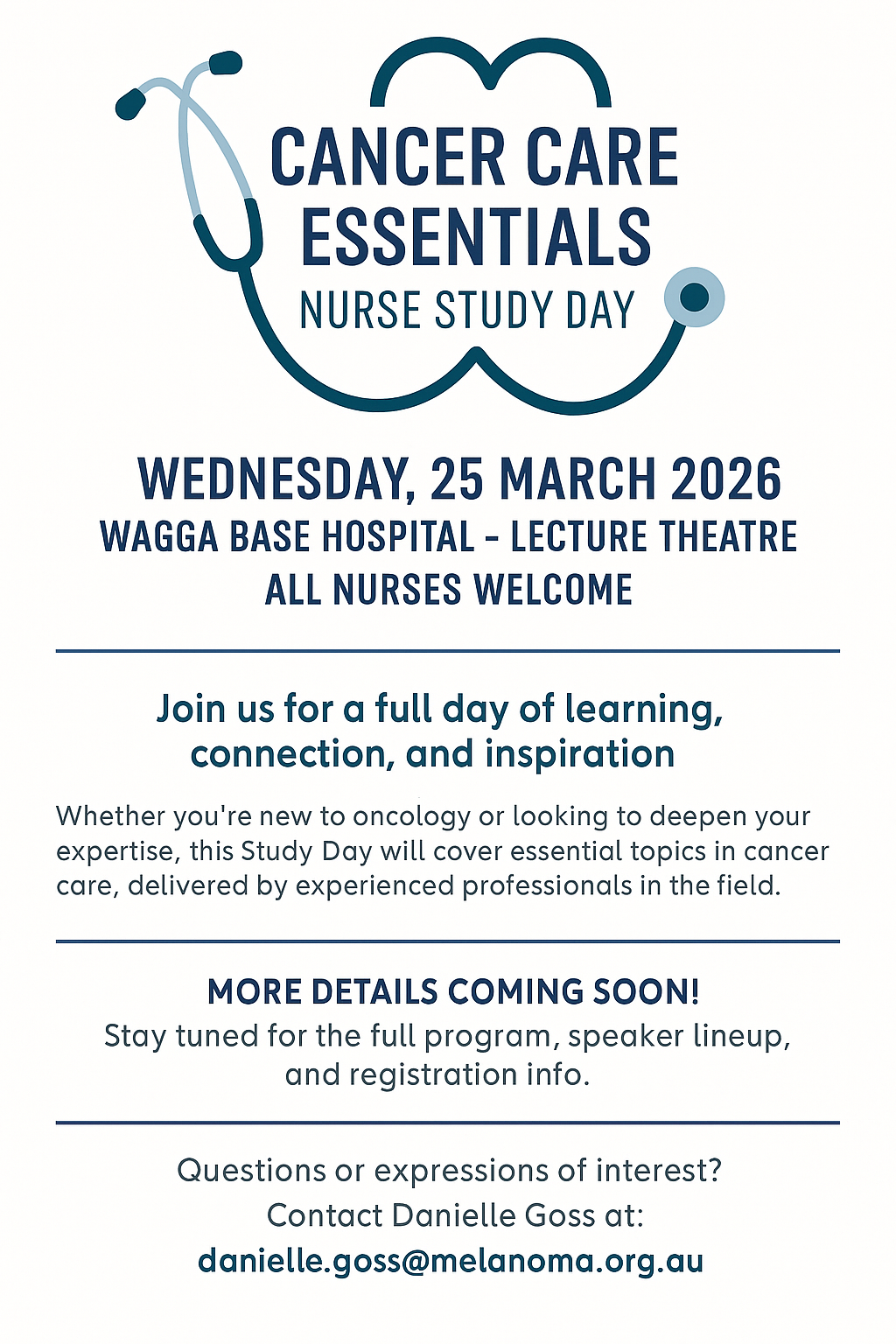
Melanoma Institute Australia: Cancer Care Essentials Nurse Study Day

  • Wagga Wagga Base Hospital - Lecture Theatre (map)
  • Google Calendar ICS

Join us for a full day of learning, connection and inspiration!

Whether you are new to nursing or looking to deepen your expertise, this study day will cover topics in cancer care, delivered by experienced professionals in the field.

Event Details

WHEN: Wednesday 25th March 2026  8:00–4:30

WHERE: WWBH Lecture Theatre

Topics

  • Cancer Treatments: Where We've Been Where We Are Now

  • Understanding Cancer Diagnosis: Scans and Biopsies Explained

  • Surgical Insights for Nurses

  • Radiotherapy: What Nurses Need to Know

  • Chemotherapy in Practice: A Practical Guide for Nurses

  • Immunotherapy: Key Concepts for Nurses

  • Metastatic Cancer: Supporting Patients Through Complexity

  • Beyond the Diagnosis: Supporting the Whole Person

About the Day

  • Guest speakers sharing their insights into their respective fields

  • Day for all nursing staff

  • Morning/afternoon tea and lunch provided

Registrations are a must — spots are limited and close 6/3/26

To register, visit: https://forms.office.com/r/WFkJWQ1Xvc

For more information, contact: Danielle.goss@melanoma.org.au

View Event →
May
18
to 19 May

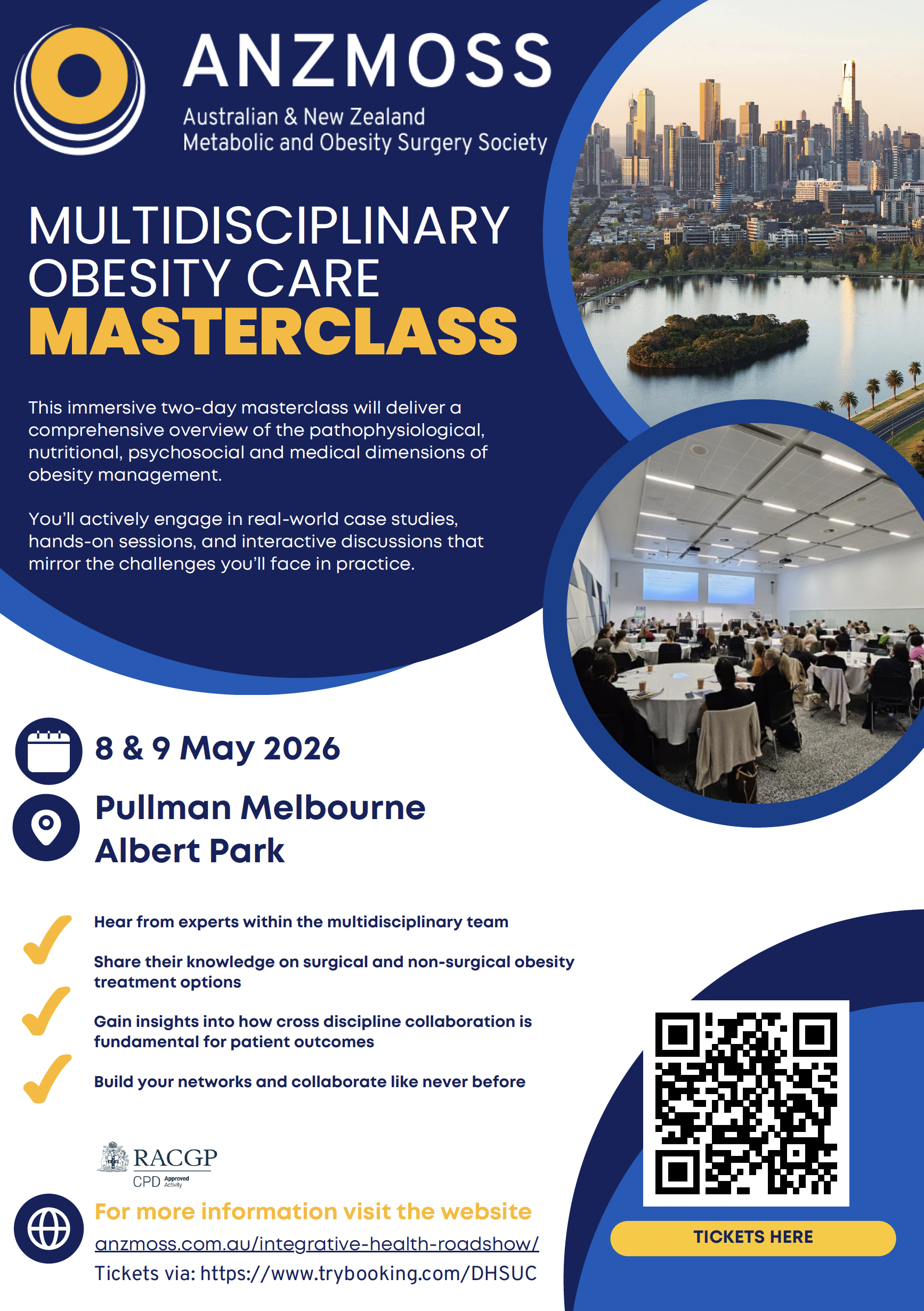
ANZMOSS: Multidisciplinary Obesity Care Masterclass

This immersive two-day masterclass will deliver a comprehensive overview of the pathophysiological, nutritional, psychosocial and medical dimensions of obesity management.

You’ll actively engage in real-world case studies, hands-on sessions, and interactive discussions that mirror the challenges you’ll face in practice.

8 & 9 May 2026
Pullman Melbourne, Albert Park

  • Hear from experts within the multidisciplinary team

  • Share their knowledge on surgical and non-surgical obesity treatment options

  • Gain insights into how cross discipline collaboration is fundamental for patient outcomes

  • Build your networks and collaborate like never before

For more information visit the website anzmoss.com.au/integrative-health-roadshow/

Tickets via: https://www.trybooking.com/DHSUC

View Event →

Feb
11
7:00 pm19:00

MHPN: Supporting Perinatal Mental Health After Loss or a History of Eating Disorders

This webinar, focused on perinatal mental health and the impact of grief and a history of eating disorders, is being presented in collaboration with COPE (Centre of Perinatal Excellence), Australia’s peak body in perinatal mental health. COPE’s vision is a connected, informed and empowered community that supports women and their families to achieve strong and enduring mental health during pregnancy and the year following birth.

This webinar is also supported by PANDA (Perinatal Anxiety & Depression Australia), who focus on supporting parents and families during pregnancy, and throughout the first year of parenthood.

This webinar will explore the experience of Nadia, a fictitious case study.

At 22 weeks into her pregnancy, Nadia is experiencing persistent worry about her pregnancy and the health of her baby, having previously experienced a miscarriage at 19 weeks. Our panel will share insights and approaches to supporting clients experiencing mental health challenges, grief and bereavement during the perinatal period and navigating the effects of a history of an eating disorder in care. Attend this webinar to develop your understanding of common perinatal mental health presentations, and how to recognise them.

Through the webinar, you will explore how past grief and a history of eating disorders can influence perinatal mental health. You will also strengthen your trauma-informed, person-centred communication strategies in clinical practice.

URL: https://mhpn.org.au/members/#/Meeting/27282

View Event →
Feb
11
2:00 pm14:00

MLHD: Advance Care Planning: Understanding the Differences: Advance Care Planning, Advance Care Directives and NFR Orders

My name is Emma and I am the CNE for Advance Care Planning,

I am excited to be running 6x virtual education sessions where each month I will be focusing on a different aspect of Advance Care Planning.

These sessions run from 2pm – 2.45pm and are targeted at all health professionals working in MLHD, regardless of your role or workplace, I invite you all to attend.  

The sessions are designed to be interactive, we encourage if able you have the ability to access the camera and a keyboard to participate in the discussion.

For further information or enquiries, please contact Emma Murphy

E: Emma.Murphy8@health.nsw.gov.au   |   Ph: 0439 987 925

What will the sessions cover?

Wednesday August 6thTopic One: Facilitating Goals of Care, The Role of Advance Care Planning. 

  • What is Advance Care Planning and why is it important?

  • How does it benefit clinicians, patients, and organisations.

  • Advance Care Planning in Australia.

  • Advance Care Planning in NSW. 

  • Components of Advance Care Planning.

  • Advance Care Plans and Directives. 

  • What makes an ACD valid, when does it not apply and when does it need to be followed. 

Wednesday September 3rdTopic Two: Who Does What? Roles and Responsibilities in Advance Care Planning.

  • Having the conversation, who does it, who needs to be involved, where does this happen?

  • Capacity and Consent.

  • When to utilise an ACD.

  • Escalation of concerns and handing over to other clinicians/facilities.

Wednesday October 1stTopic Three: Ethics and the Law in Advance Care Planning. 

What Clinicians Need to Know.

  • Capacity, Consent and ACP in NSW.

  • ACP in other states and territories.

  • Common Law.

  • ACP terminology: Enduring Guardian, Substitute Decision Maker.

  • Signing, witnessing and validity.

  • VAD, tissue and organ donation.

  • Resources and support available.

Wednesday November 19thTopic Four: When to Begin, What to Say and When to Say More:

A Guide to having Advance Care Planning Conversations.

  • Who with? When? How to have the conversation.

  • Preparing for ACP discussions.

  • Responding to cues from patients and families.

  • Communication. 

Wednesday February 11thTopic Five: Understanding the Differences: Advance Care Planning, Advance Care Directives and NFR Orders.

  • The purpose of each vs the differences.

  • When would someone need one of these documents.

  • When does it get completed and how long does it last.

  • When should it be used?

  • What happens if my patient does not have any of the above?

Wednesday March 4thTopic Six: How to Complete and Access an Advance Care Directive: A Guide for Clinicians.

  • A breakdown of each section of the ACD.

  • ACD in NSW.

  • How to find on EMR.

  • Where to upload this.

  • Information for patients and families (accessing, storage, copies).

  • Changing/Revoking an ACD.

View Event →
Feb
10
6:30 pm18:30

Carers NSW: Strengthening Clinical Outcomes in General Practice through Carer Identification and Support

Carers of people with disability, mental illness, alcohol or drug dependency, terminal illness, frail aged or chronic illness have worse physical and mental health outcomes as compared to the general population.

GPs are in the best position to identify carers early and ensure access to health and other services.

There is emerging evidence that caring itself is a social determinant of health.

Additionally, involving carers in treatment planning for the person they care for leads to better outcomes.

Carers NSW, the peak organisation for carers in NSW, is offering a free 60-minute interactive online workshop to provide general practice staff with practical steps to identify carers earlier, involve them appropriately in care, and connect them to support, helping improve continuity of care for patients and carers.

Carers are present in every general practice, yet they often go unnoticed or unrecognised. Around one in eight people is a carer, supporting treatment adherence of the patient attending the GP, attending appointments, and managing day-to-day care. However, many do not identify themselves as carers or access available supports until they are already overwhelmed. For many, general practice is the first place where the strain of caring may be noticed. Early identification can support better planning, clearer follow-up and fewer avoidable escalations for both the patient and the family or friend carer. The session will explore common scenarios encountered in general practice, demonstrate best-practice approaches, and equip attendees with practical tools to identify, engage, and refer carers to appropriate supports and support better clinical outcomes for both care recipients and carers.

Designed to be both informative and interactive, this workshop aims to build staff confidence to recognise carers in everyday consults and practice workflows, supporting clearer carer planning and continuity of care, without adding unnecessary work to already busy teams.

By the end of this webinar, you will be able to:

  • Identify a diverse range of carers earlier within general practice settings

  • Recognise the impact of caring on a person’s health and wellbeing

  • Identify ways to partner with carers in general practice

  • Initiate appropriate referrals for carers to improve health outcomes and continuity of care

  • Apply practical strategies that support carer inclusion in healthcare 

URL: https://analytics-au.clickdimensions.com/cn/aosfc/GCAP100226

View Event →
Dec
11
12:00 pm12:00

SEARCH Project: Nurse led models of care

The availability of abortion care in regional and remote areas of NSW often depends on the skills and abilities of nurses and midwives to facilitate access to choices for that care.

Family Planning Australia’s Director of Nursing, Kitty Smith, will be talking about establishing and leading a nurse led model of abortion care, including:

  • What it means

  • What it might look like

  • How to establish a service and build the support needed

Building on the approach to patient centredness and technical knowledge, the webinar will also highlight the importance of nurses in delivering abortion care in their regions.

Questions? Please contact us via searchproject@fpnsw.org.au.

View Event →
Dec
10
6:30 pm18:30

SEARCH Project: Nurse led models of care

The availability of abortion care in regional and remote areas of NSW often depends on the skills and abilities of nurses and midwives to facilitate access to choices for that care.

Family Planning Australia’s Director of Nursing, Kitty Smith, will be talking about establishing and leading a nurse led model of abortion care, including:

  • What it means

  • What it might look like

  • How to establish a service and build the support needed

Building on the approach to patient centredness and technical knowledge, the webinar will also highlight the importance of nurses in delivering abortion care in their regions.

Questions? Please contact us via searchproject@fpnsw.org.au.

View Event →
Dec
3
6:30 pm18:30

NBCSP: Webinar 4: Lead the change: driving bowel cancer screening uptake within your practice 

This webinar will help you identify goals for enhancing patient engagement with the National Bowel Cancer Screening Program. Learn how to determine the training needs of healthcare professionals within your practice and system improvements that can be implemented to boost patient participation in bowel cancer screening. You will also explore training tools and resources to help you create tailored education sessions for your practice colleagues. At the end of this webinar, you will be equipped with the strategies and knowledge to lead the change and to help increase bowel cancer screening in your community.

Learning Outcomes

At the completion of this webinar, you will be able to:  

  • Outcome 1: Identify organisational goals for improving engagement with the NBSCP  

  • Outcome 2: Determine the training needs of healthcare professionals within the practice to improve patient engagement with population bowel screening  

  • Outcome 3: Determine system improvements for the practice to improve patient engagement with population bowel screening  

  • Outcome 4: Select training tools and resources to provide a tailored education session for your practice colleagues  

View Event →
Nov
27
1:00 pm13:00

Just Include Me: Inclusive Practice Workshop for Health Professionals and Staff who work with people with intellectual disability

The purpose of the workshop is to increase awareness of intellectual disability and the challenges that people with intellectual disability face within the healthcare system.  The National Safety and Quality Health Service (NSQHS) Standards User guide for the Health Care of People with Intellectual Disability recommends inclusive practice improvements as a response to significant evidence of poor health outcomes for people with intellectual disability in Australia’s health system.

 Date: 27th November

Time: 1.00pm-2.00pm

Where: online 

Register here: https://cid.org.au/health-events/  or you can refer to the flyer attached. 

 Who should attend: Health professionals and staff who support people with intellectual disability as part of their job. 

This workshop is co-facilitated by CID team members with lived experience of intellectual disability. If you can’t make this date then you’re in luck, the workshop is run on the last Thursday of each month. Use the above link for the dates.   

These workshops can be tailored to the individual needs of the audience and service delivery through relevant scenarios, activities and topics covered. 

We also invite you to visit our website for more information about CID’s free resources and healthcare projects: https://cid.org.au/issues/health/ 

  • These resources include our free online training for health workers to learn about reasonable adjustments, inclusive communication, communication tools, behaviour as communication, consent and decision making in health and virtual care.  

Our free online learning, Just Include Me, is available to complete now. 

View Event →
Nov
20
to 21 Nov

Asthma Educators Course

A 2 day interactive course (attendees may attend onsite) covering the latest advances in asthma management and care for Health Professionals. Taking an holistic approach, the course is presented by active experts and helps skill participants to be able to work effectively one on one with clients for effective management and health outcomes. 

URL: https://www.trybooking.com/DBPMZ

View Event →
Nov
19
2:00 pm14:00

MLHD: Advance Care Planning: When to Begin, What to Say and When to Say More: A Guide to having Advance Care Planning Conversations

My name is Emma and I am the CNE for Advance Care Planning,

I am excited to be running 6x virtual education sessions where each month I will be focusing on a different aspect of Advance Care Planning.

These sessions run from 2pm – 2.45pm and are targeted at all health professionals working in MLHD, regardless of your role or workplace, I invite you all to attend.  

The sessions are designed to be interactive, we encourage if able you have the ability to access the camera and a keyboard to participate in the discussion.

For further information or enquiries, please contact Emma Murphy

E: Emma.Murphy8@health.nsw.gov.au   |   Ph: 0439 987 925

What will the sessions cover?

Wednesday August 6thTopic One: Facilitating Goals of Care, The Role of Advance Care Planning. 

  • What is Advance Care Planning and why is it important?

  • How does it benefit clinicians, patients, and organisations.

  • Advance Care Planning in Australia.

  • Advance Care Planning in NSW. 

  • Components of Advance Care Planning.

  • Advance Care Plans and Directives. 

  • What makes an ACD valid, when does it not apply and when does it need to be followed. 

Wednesday September 3rdTopic Two: Who Does What? Roles and Responsibilities in Advance Care Planning.

  • Having the conversation, who does it, who needs to be involved, where does this happen?

  • Capacity and Consent.

  • When to utilise an ACD.

  • Escalation of concerns and handing over to other clinicians/facilities.

Wednesday October 1stTopic Three: Ethics and the Law in Advance Care Planning. 

What Clinicians Need to Know.

  • Capacity, Consent and ACP in NSW.

  • ACP in other states and territories.

  • Common Law.

  • ACP terminology: Enduring Guardian, Substitute Decision Maker.

  • Signing, witnessing and validity.

  • VAD, tissue and organ donation.

  • Resources and support available.

Wednesday November 19thTopic Four: When to Begin, What to Say and When to Say More:

A Guide to having Advance Care Planning Conversations.

  • Who with? When? How to have the conversation.

  • Preparing for ACP discussions.

  • Responding to cues from patients and families.

  • Communication. 

Wednesday February 4thTopic Five: Understanding the Differences: Advance Care Planning, Advance Care Directives and NFR Orders.

  • The purpose of each vs the differences.

  • When would someone need one of these documents.

  • When does it get completed and how long does it last.

  • When should it be used?

  • What happens if my patient does not have any of the above?

Wednesday March 4thTopic Six: How to Complete and Access an Advance Care Directive: A Guide for Clinicians.

  • A breakdown of each section of the ACD.

  • ACD in NSW.

  • How to find on EMR.

  • Where to upload this.

  • Information for patients and families (accessing, storage, copies).

  • Changing/Revoking an ACD.

View Event →
Nov
18
7:30 pm19:30

RACGP Online Forum - NSW STI & HIV Care Update: Ask Us Anything!

With rising STI notifications in NSW, it’s vital for GPs to stay up to date with testing, prevention, and treatment aligned with current Australian guidelines.

Join this interactive RACGP accredited online forum to strengthen your knowledge and confidence in managing common and emerging sexual health presentations in general practice.

Through real-world case studies and expert insights, presenters will explore:
• Practical tools and referral pathways to streamline patient-centred care
• Prevention strategies, including PrEP
• Testing, diagnosis, and treatment updates for STIs and HIV
• Opportunities to discuss clinical, practical, and systems-related challenges


Facilitator
Dr Miranda Sherley – BSc(Hons), PhD, MBBS, FRACGP, FAChSHM

Presenters
Dr Bradley Forssman
Dr Sama Balasubramanian


📅 Date: Tuesday, 18 November 2025
Time: 7:30 PM – 8:30 PM (AEST)
📍 Online: Free registration
🎓 Earn 1 CPD Hour (RACGP: Educational Activity)

View Event →
Nov
18
7:30 pm19:30

RACGP Online Forum - NSW STI & HIV Care Update: Ask Us Anything!

With rising STI notifications in NSW, it’s vital for GPs to stay up to date with testing, prevention, and treatment aligned with current Australian guidelines.

Join this interactive RACGP accredited online forum to strengthen your knowledge and confidence in managing common and emerging sexual health presentations in general practice.

Through real-world case studies and expert insights, presenters will explore:

  • Practical tools and referral pathways to streamline patient-centred care

  • Prevention strategies, including PrEP • Testing, diagnosis, and treatment updates for STIs and HIV

  • Opportunities to discuss clinical, practical, and systems-related challenges

URL: https://www.racgp.org.au/racgp-digital-events-calendar/online-event-items/webinars/nsw-sti-hiv-care-update-ask-us-anything

View Event →
Nov
18
6:30 pm18:30

NBCSP: Webinar 4: Lead the change: driving bowel cancer screening uptake within your practice

This webinar will help you identify goals for enhancing patient engagement with the National Bowel Cancer Screening Program. Learn how to determine the training needs of healthcare professionals within your practice and system improvements that can be implemented to boost patient participation in bowel cancer screening. You will also explore training tools and resources to help you create tailored education sessions for your practice colleagues. At the end of this webinar, you will be equipped with the strategies and knowledge to lead the change and to help increase bowel cancer screening in your community.

Learning Outcomes

At the completion of this webinar, you will be able to:  

  • Outcome 1: Identify organisational goals for improving engagement with the NBSCP  

  • Outcome 2: Determine the training needs of healthcare professionals within the practice to improve patient engagement with population bowel screening  

  • Outcome 3: Determine system improvements for the practice to improve patient engagement with population bowel screening  

  • Outcome 4: Select training tools and resources to provide a tailored education session for your practice colleagues  

View Event →
Nov
15
8:00 am08:00

International World Neurology Conference 2025

The International World Neurology Conference 2025 is a hybrid event held November 15–16 in Orlando (with virtual access) that brings together neurologists, neurosurgeons, neuroscientists, allied health professionals, and industry innovators under the theme “Bridging Neural Pathways & Mental Wellness.” Attendees will engage in keynote lectures, hands‑on VR/neurofeedback workshops, AI‑driven diagnostic demos, and poster sessions, earn CPD credits (1 per presentation minute), and network with global peers. Key deadlines include abstract submissions by September 15 and registrations by June 30, 2025. 

URL: https://neurologyconference2025.com/

View Event →
Nov
13
12:30 pm12:30

Comorbidity Guidelines webinar: Disasters, climate change and mental health

This webinar will give an overview of the impact of disasters and climate change on mental health and is part of the University of Sydney’s Matilda Centre for Research in Mental Health and Substance Use Comorbidity Project webinar series, which is focused on applying evidence into practice.

Speakers include

Professor Lisa Gibbs

Professor Lisa Gibbs is a Professor of Public Health and Director of the Disaster, Climate and Adversity Unit in Melbourne School of Population and Global Health and Academic Lead for Community Resilience and Public Health in the Centre for Disaster Management and Public Safety. Her research focuses on disaster recovery and resilience particularly relating to the interplay between individual and community level outcomes.

By the end of this webinar, attendees will be able to:

  • Understand the potential long term mental health impacts of disaster exposure

  • Outline protective strategies for mental health and wellbeing in disaster contexts

  • Identify where to find helpful resources for working with communities affected by disaster

Register here: https://uni-sydney.zoom.us/webinar/register/WN_CZ2yl69_QxSTI3ytowa6lA#/registration

URL: https://comorbidityguidelines.org.au/resources/webinars/disasters-climate-change-and-mental-health

View Event →
Nov
10
to 11 Nov

Smoking & Vaping Cessation Educator Course

 A 2 day evidence based course empowers professionals to treat and manage nicotine dependency. Taking an holistic approach using proven evidence based techniques, the course is presented by active experts and helps skill participants to be able to work confidently and effectively one on one with clients for effective nicotine management and health outcomes.

URL: https://www.trybooking.com/DBPMO

View Event →
Nov
8
9:00 am09:00

Neurology & Neurosurgical: GP Update

 The aim of this event is to enhance general practitioners knowledge and skills when identifying, managing and supporting patients with neurological presentations Early management and detection of dementia and other neurological conditions improves outcomes and Quality of life. GPs are well placed to support patients as part of the multidisciplinary team and identify red flags for referral to the specialist team. RACGP accredited activity. Hours available EA 4.5, RP 4.0, MO 5.0. 

URL: https://www.eventbrite.com.au/e/neurology-neurosurgical-gp-update-tickets-1759464207809?aff=oddtdtcreator

View Event →
Nov
6
6:30 pm18:30

NBCSP: Webinar 3: Overcoming barriers: engaging people hesitant to screen for bowel cancer

This webinar will help you identify individuals and population groups who participate in bowel cancer screening at lower rates. Learn about the barriers that hinder participation in screening and explore effective communication and outreach strategies to overcome screening hesitancy. The webinar will also examine practices that support engagement with specific patient groups, helping healthcare providers tailor their approach to increase screening rates. By the end of this session, attendees will be equipped with the knowledge and tools to address hesitancy and improve patient participation in bowel cancer screening programs. 

Learning Outcomes

At the completion of this webinar, you will be able to:  

  • Outcome 1: Identify people and population groups who screen in lower numbers  

  • Outcome 2: Determine barriers to participation in screening  

  • Outcome 3: Identify communication and outreach strategies and how to overcome barriers to participation in screening  

  • Outcome 4: Examine practices that support engagement with own patient demographic   

View Event →
Nov
6
2:30 pm14:30

MLHD: Grief and Bereavement Support in Palliative Care: Compassionate Approaches for Families and Caregivers

 2025 Palliative Care online education sessions for staff at residential aged care facilities and home care providers.

MLHD invites all staff working in Residential Aged Care Facilities and Home Care to please join the 2025 Palliative Care Education virtual sessions, presented by members of the MLHD Specialist Palliative Care Team. 

Please note: these sessions will not be recorded. 

WHERE: Via Microsoft Teams 

View Event →
Nov
6
12:30 pm12:30

Mental Health First Aid Australia: Breaking the Silence, Building Strength: A Conversation on Men's Mental Health

This webinar explores men’s mental health across life stages—from adolescence to older adulthood—highlighting the social, emotional, and cultural factors that shape wellbeing, identity, and help-seeking. Through real-life examples and open discussion, participants will gain practical tools to recognise distress, start supportive conversations, and connect men and boys to help in meaningful ways.

Featuring voices from education, community programs, and frontline practice, the session will unpack how mental health challenges evolve through major life transitions such as work, relationships, fatherhood, and retirement. It will also explore cultural and societal barriers to help-seeking, key warning signs of distress, and how Mental Health First Aiders can support men who may be reluctant to open up.

Tech tips for watching the webinar

  • Please use Chrome or Firefox where possible.

  • Log in at the scheduled start time or a few minutes prior. Logging in too early may result in a blank screen.

  • Refresh your browser if the broadcast hasn’t started by the scheduled time.

  • For any issues, please contact: community@mhfa.com.au

View Event →
Nov
5
7:00 pm19:00

NCIRS webinar: Protecting adolescents through immunisation: insights, drivers and opportunities for action   

Date: Wednesday 5 November 2025 
Time: 7:00–8:30 p.m. AEDT 
Location: Online (register here)

Adolescent vaccination coverage in Australia has been declining since the COVID-19 pandemic.  

This webinar will explore the latest evidence and practical strategies to help reverse the trend and strengthen community confidence in immunisation.  

The session is intended for anyone who has a role in supporting adolescent health, including public health professionals, educators, school staff, nurses, general practitioners and pharmacists.  

Expert speakers will share insights and practical strategies to support vaccine confidence and uptake among young people and their parents and carers. 

The webinar will cover: 

·        current trends in adolescent vaccination coverage in Australia 

·        the adolescent immunisation schedule 

·        the latest Sharing Knowledge About Immunisation (SKAI) research into the barriers and drivers of adolescent vaccination 

·        practical strategies to support vaccine confidence and uptake among teenagers. 

The session will also introduce SKAI Adolescent – a new information suite on the SKAI website that is designed to support families to make informed decisions about adolescent immunisation. 

Can’t make it live? You can catch up later – the webinar will be recorded and made available on the NCIRS website. Register now to receive the link straight to your inbox once it’s available. 

View Event →